Serving Bellevue, Kirkland, Redmond, and the Greater Seattle Area
Are you tired of depending on glasses or contact lenses for everyday tasks? If you're over 45 and noticing your vision isn't what it used to be, you're not alone. Refractive Lens Exchange (RLE) surgery offers Seattle-area residents a permanent solution to restore clear vision at every distance—and it may be the right choice for you.
What Is RLE Surgery?
Refractive Lens Exchange, also known as RLE surgery, is essentially the same procedure as cataract surgery—widely considered the safest and most effective surgery in all of medicine. The procedure is performed over 4 million times per year in the United States alone, with an exceptional track record of success. To dig into the data, see our full guide on RLE safety, risks, and benefits.
During RLE surgery, your eye's natural lens is replaced with an advanced intraocular lens (IOL) that can restore the focusing abilities of a youthful eye. For patients in Bellevue, Kirkland, Redmond, and throughout the Puget Sound region, this procedure offers freedom from glasses decades before a traditional cataract diagnosis.
Understanding Your Eye's Natural Lens
To understand why RLE surgery is so effective, it helps to know a bit about how your eye works.
Your eye has two main focusing structures: the cornea (the clear front surface) and the natural lens (located just behind the iris). When you're young, your natural lens is remarkably flexible—it changes shape to focus on objects at any distance, becoming curvier for close-up vision and flatter for distance viewing.
However, starting around age 45, the lens gradually stiffens and loses this flexibility. This condition, called presbyopia, is universal—it affects everyone regardless of whether you've had perfect vision your entire life. You'll notice it when reading menus becomes difficult or you find yourself holding your phone at arm's length.
The Progression from Presbyopia to Cataracts
As the years pass, your natural lens doesn't just become rigid—it also yellows and clouds. Here's what typically happens:
- Age 40-45: The lens begins to stiffen. Reading glasses become necessary.
- Age 50-55: The lens turns yellow and rigid, reducing image quality and light transmission.
- Age 65-75: The lens continues to cloud, eventually forming a visually significant cataract.
- Age 75+: Most Americans qualify for insurance-covered cataract surgery at this stage.
The key insight? The lens will inevitably need to be replaced. RLE surgery simply addresses this reality 20+ years earlier, allowing you to enjoy glasses-free vision during your most active decades.
RLE Surgery vs. LASIK: Which Is Right for You?
Many patients in the Seattle area ask about LASIK as an alternative. While LASIK is an excellent procedure for certain candidates, it works differently than RLE:
LASIK reshapes your cornea to correct vision. It can provide "blended vision" (one eye for distance, one for near), but it doesn't address the aging lens inside your eye. Eventually, the lens will continue to stiffen and cloud, potentially requiring glasses again—and ultimately cataract surgery.
RLE surgery replaces the lens entirely with a permanent intraocular lens. Once performed, your eye won't change significantly afterward. For this reason, RLE is often called "the final surgery."
For farsighted patients especially, RLE typically outperforms LASIK in visual outcomes.
What to Expect: The RLE Surgery Experience
If you're considering RLE surgery in Bellevue, Kirkland, or anywhere in the Greater Seattle area, here's what the process looks like:
Before Surgery
During your initial consultation, we'll perform comprehensive measurements of your eyes, including:
- Biometry scans to determine your eye's exact dimensions
- Astigmatism assessment to plan for correction
- Retinal health evaluation to ensure you're a good candidate
These measurements help us select the perfect intraocular lens power to correct your specific vision needs.
During Surgery
RLE surgery is gentle, painless, and remarkably quick—typically just 5-10 minutes per eye. You'll receive mild sedation to keep you relaxed and comfortable (though technically awake)—patients commonly ask about this, and we cover it in depth in Are You Awake During Eye Lens Replacement Surgery?. You'll need someone to drive you home afterward.
Both eyes can often be treated on the same day, one after the other. Because RLE patients are generally younger with healthier eyes than traditional cataract patients, the procedure tends to be even safer and more straightforward.
After Surgery
Recovery is typically smooth and rapid. Your eye will have a crystal-clear intraocular lens with significantly higher light transmission than your natural lens ever had. Most patients notice dramatic improvement within the first few days.
Correcting Astigmatism During RLE Surgery
Many patients have astigmatism—a common condition where the cornea is shaped more like a rugby ball than a baseball. This creates blur that glasses or contacts typically correct.
The good news: astigmatism can be corrected during your RLE surgery using one of two methods:
- Relaxing incisions that reduce the steeper corneal curvature
- Toric intraocular lenses specifically designed to neutralize astigmatism
We'll determine the best approach for your eyes during your consultation.
Choosing Your Intraocular Lens
One of the most exciting aspects of modern RLE surgery is the range of advanced intraocular lenses available. Over the past decade, lens technology has made remarkable strides in restoring youthful vision.
Multifocal lenses are an excellent choice for patients with healthy eyes who want the broadest possible range of vision. These lenses work by separating incoming light into distinct focusing elements for near, intermediate, and distance vision. The result: 100% of patients with multifocal lenses achieve independence from glasses for everyday tasks.
Some patients initially notice rings around lights at night with multifocal lenses, though modern lens designs have minimized this significantly. Your brain is remarkably adaptable and will typically adjust to the new visual system over time.
Who Is a Good Candidate for RLE Surgery?
RLE surgery works best for patients who:
- Are over 45 and experiencing presbyopia
- Want freedom from glasses and contact lenses
- Have healthy eyes without significant retinal disease
- Are motivated to reduce dependence on corrective eyewear
Special Considerations
Certain conditions may require additional evaluation:
- High myopia (nearsightedness): Patients with very long eyes (greater than 26mm) have a higher baseline risk of retinal issues. We'll discuss this thoroughly if it applies to you.
- Dry eye: Significant dry eye can affect corneal measurements and visual quality. Treating dry eye before surgery optimizes outcomes.
- Retinal conditions: Macular degeneration, macular holes, or epiretinal membranes may limit the benefits of RLE surgery.
During your consultation, we'll thoroughly evaluate your eyes and discuss whether RLE is the right choice for your situation.
RLE Surgery vs. Waiting for Cataracts
Some patients wonder whether they should simply wait until cataracts develop and insurance covers the procedure. Here are some factors to consider:
- Timing matters for healing: Cataract surgery becomes more complex as cataracts progress. A 90-year-old's cataract surgery may take several weeks to heal, while RLE in a younger patient typically heals much faster.
- Enjoy your active years: RLE surgery at 55 means 20+ years of glasses-free vision during your most active decades—traveling, playing sports, enjoying hobbies without the hassle of corrective lenses.
- Insurance considerations: Most Americans don't qualify for insurance-covered cataract surgery until around age 75, when vision has deteriorated to 20/40 or worse. RLE allows you to take control of your vision timeline.
Why Choose a Seattle-Area RLE Surgeon?
When selecting a surgeon for RLE or cataract surgery in the Greater Seattle area, experience and technology matter. Look for:
- A surgeon who performs high volumes of lens-based procedures
- State-of-the-art surgical technology and diagnostic equipment
- Comprehensive pre-operative testing and personalized lens selection
- A track record of excellent outcomes in the Bellevue, Kirkland, and Redmond communities, including experience with patients who chose RLE after years of LASIK—see why a LASIK pioneer chose RLE for his own eyes
Schedule Your RLE Consultation Today
If you're ready to explore whether RLE surgery is right for you, we invite you to schedule a comprehensive consultation. We proudly serve patients throughout the Greater Seattle area, including Bellevue, Kirkland, Redmond, Sammamish, Woodinville, Bothell, Issaquah, Mercer Island, Seattle, and surrounding Eastside communities.
During your visit, we'll perform detailed measurements, evaluate your eye health, discuss your lifestyle and vision goals, and help you understand all your options.
Take the first step toward visual freedom. Contact us today to schedule your RLE surgery consultation.
This content is for educational purposes and is not intended as medical advice. Individual results vary, and a comprehensive eye examination is necessary to determine candidacy for any surgical procedure.
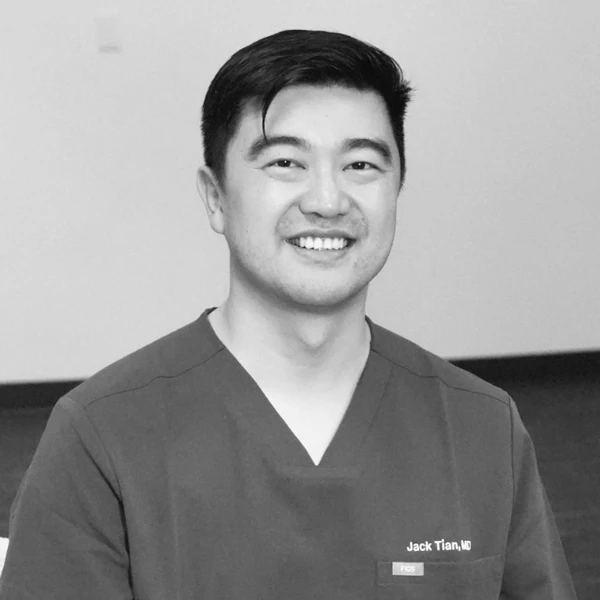
Written by
Dr. Jack Tian, MDMedical and Facility Director
Dr. Jack Tian is a board certified ophthalmologist, renowned for his specialization in refractive lens exchange (RLE), premium cataract surgery, intraocular lens upgrades (IOLx) and the use of implantable collamer lenses (ICL). His undergraduate degree was in molecular biology from UC Berkeley. He earned his Medical Degree from David Geffen School of Medicine at UCLA and completed advanced ophthalmology surgical training at the Flaum Eye Institute at the University of Rochester.
View full profile →