Your eye doctor just told you that your prescription is too strong for LASIK, or your corneas are too thin, or your dry eyes make laser surgery risky. You walked into the appointment expecting one straightforward answer and left with a term you had never heard before: ICL. Now you need to figure out whether an implantable lens actually makes sense for your eyes, your lifestyle, and your budget.
Both ICL and LASIK correct nearsightedness and reduce your dependence on glasses and contacts. They take different paths to get there, and the right choice depends on your prescription strength, corneal thickness, and how your eyes handle dryness. Patients across the Greater Seattle area and Eastside communities like Bothell, Bellevue, and Kirkland face this decision every year when standard contacts and glasses stop fitting their needs.
How ICL and LASIK Correct Your Vision Differently
LASIK reshapes your cornea with a laser. The surgeon creates a thin flap, removes a precise amount of corneal tissue underneath, and repositions the flap. Your reshaped cornea bends light differently, and your vision improves within hours. The trade-off is that corneal tissue does not grow back. The change is permanent and irreversible.
ICL takes a completely different approach. Your surgeon makes a small incision and places a soft, flexible Collamer lens between your iris and your natural lens. The implanted lens corrects how light reaches your retina without removing any corneal tissue. A five-year study found that over ninety five percent of ICL patients achieve clear vision of 20/25 or better, with no induced cataracts and no significant changes in eye pressure.
The practical difference matters. LASIK changes the structure of your eye permanently. ICL surgery for correcting severe nearsightedness adds a lens that your surgeon can remove or replace later if your needs change. That reversibility gives ICL a flexibility that LASIK cannot match.
Where ICL and LASIK Overlap
Both procedures share the same goal: freedom from glasses and contacts. Both deliver rapid improvement in vision. Both require a stable prescription for at least one year before surgery. Recovery from either procedure allows most patients to return to normal activities within days.
LASIK and ICL also carry similar baseline risks that any eye surgery involves, including infection, inflammation, and temporary visual disturbances like halos or glare. Serious complications from either procedure remain rare when performed by an experienced surgeon. The differences show up in who qualifies, what each procedure does to your cornea, and how your eyes respond over the long term.
Which Procedure Fits Your Eyes Better
Your prescription strength and corneal health determine which option works for you. LASIK handles mild to moderate nearsightedness effectively, generally up to about -10 diopters. ICL corrects ICL candidacy criteria and what the procedure involves ranging from -3 to -20 diopters, making it the stronger choice for patients with high myopia that LASIK cannot fully address.
Corneal thickness plays a deciding role. LASIK removes tissue from your cornea, so patients with thin corneas face higher risk of complications and may not qualify. ICL leaves your cornea completely intact, which makes it the go-to option when your corneal measurements rule out laser correction.
Dry eye history matters too. LASIK disrupts corneal nerves during the flap creation, and many patients experience worsened dry eyes for weeks or months afterward. ICL does not touch those nerves. Patients who already deal with dry eye symptoms in the Pacific Northwest climate often find that ICL avoids the dryness problem entirely. If your prescription, corneas, and age all qualify for either procedure, patients over 45 may also want to explore refractive lens exchange for permanent vision correction as a third path that addresses both nearsightedness and the early onset of presbyopia.
Safety, Recovery, and What the Research Shows
The FDA approved the EVO Visian ICL for myopia correction in March 2022 after clinical trials showed strong outcomes across more than one million lenses implanted worldwide. The approval covers patients aged 21 to 60 with myopia between -3 and -20 diopters. LASIK has been FDA-approved since 1999 and carries over two decades of long-term outcome data.
Recovery timelines differ slightly. LASIK patients typically see clearly within 24 hours. ICL patients reach full visual clarity within a few days to one week. Both procedures involve follow-up appointments to monitor healing, and both require medicated eye drops for several weeks after surgery.
The risk profiles diverge in important ways. LASIK carries a small risk of flap complications and permanent dry eye. ICL carries a small risk of increased eye pressure and, rarely, early cataract development. Neither risk is common, and both shrink further when an experienced surgeon matches the procedure to the right candidate. Reading about understanding the risks and benefits of lens surgery helps put these numbers in context before your consultation.
What Seattle-Area Patients Ask About ICL and LASIK
Choosing between ICL and LASIK involves your eyes, your prescription, and your tolerance for different types of surgical approaches. The answers vary by patient, and a consultation with an ophthalmologist who performs both procedures gives you the clearest picture. These questions come up most often among patients in Bothell, Bellevue, Seattle, and the surrounding Eastside communities weighing their options.
Is ICL more expensive than LASIK?
Yes. ICL typically costs $3,500 to $5,000 per eye, while LASIK ranges from $1,500 to $3,000 per eye. The higher cost reflects the implantable lens itself and the intraocular nature of the procedure. Many practices offer financing, and FSA or HSA funds can cover either surgery.
Can the ICL lens be removed later?
Yes. Reversibility is one of ICL's defining advantages. Your surgeon can remove or replace the lens if your prescription changes significantly or if you develop cataracts later in life. LASIK's corneal reshaping cannot be reversed.
Does ICL cause dry eyes like LASIK?
ICL does not cut corneal nerves, so it does not trigger the dry eye symptoms that some LASIK patients experience. If you already suffer from chronic dry eyes, ICL avoids making the problem worse.
How long does the ICL lens last?
The Collamer lens is designed to stay in your eye permanently. It does not degrade, does not require replacement on a schedule, and does not need cleaning or maintenance. If your vision changes decades later, premium cataract surgery with advanced lens options can address both the ICL and any age-related lens changes at the same time.
Am I too old for ICL?
The FDA recently expanded the approved age range for the EVO Visian ICL from 21-45 to 21-60 years old. Patients over 45 who also experience early presbyopia symptoms may benefit more from a lens replacement procedure than from ICL, depending on their goals.
Choosing the Right Procedure Starts With Your Eyes
The ICL vs LASIK decision comes down to what your eyes need, not which procedure sounds better on paper. Your prescription strength, corneal thickness, dry eye history, and age all point toward one option or the other, and sometimes toward a third alternative entirely.
If you want to understand which procedure fits your specific situation, Dr. Jack Tian at Near & Far Vision Partners focuses exclusively on lens surgery specialists serving Bothell and Seattle and can walk you through the options based on your exam results.
This content is for educational purposes and is not intended as medical advice. Individual results vary, and a comprehensive eye examination is necessary to determine candidacy for any surgical procedure.
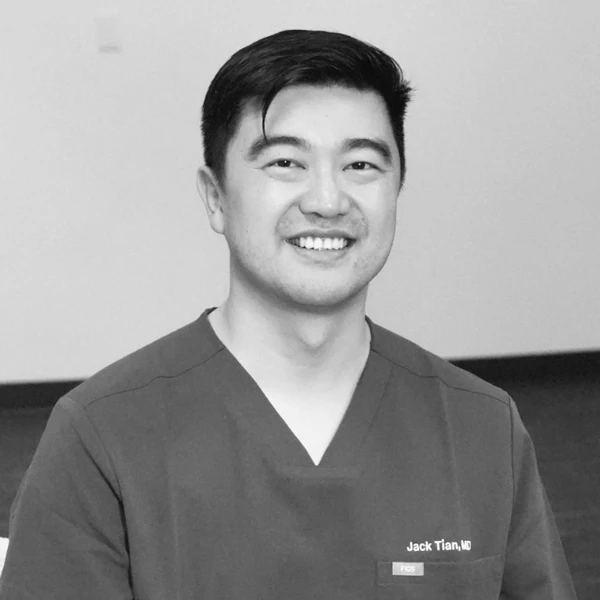
Written by
Dr. Jack Tian, MDMedical and Facility Director
Dr. Jack Tian is a board certified ophthalmologist, renowned for his specialization in refractive lens exchange (RLE), premium cataract surgery, intraocular lens upgrades (IOLx) and the use of implantable collamer lenses (ICL). His undergraduate degree was in molecular biology from UC Berkeley. He earned his Medical Degree from David Geffen School of Medicine at UCLA and completed advanced ophthalmology surgical training at the Flaum Eye Institute at the University of Rochester.
View full profile →